In interior door production, product names often reflect surface treatment, construction method, or visual profile. Buyers may encounter different terms that describe related manufacturing approaches rather than entirely separate products. From a factory standpoint, understanding how these door types are made helps clarify performance expectations and application suitability. The following questions explain how several widely used interior doors are produced and controlled.
Q1: What does a White Primer Door mean in manufacturing?
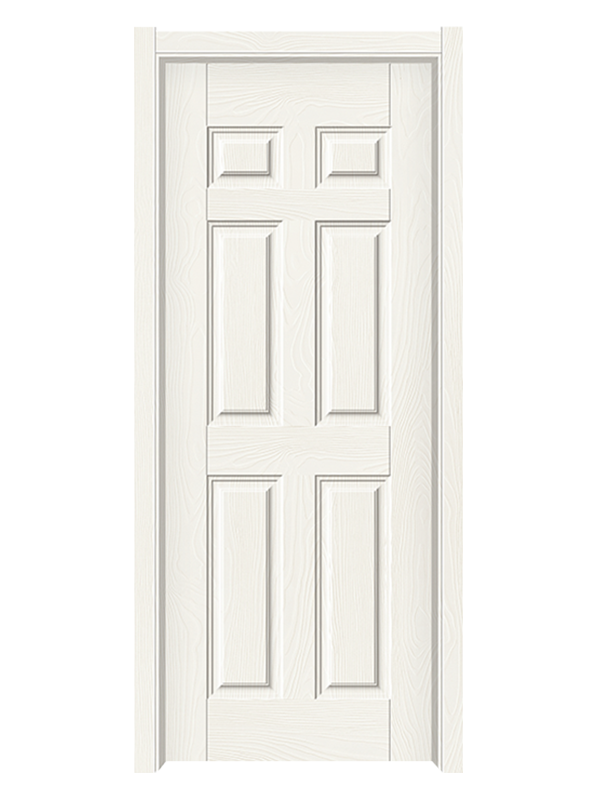
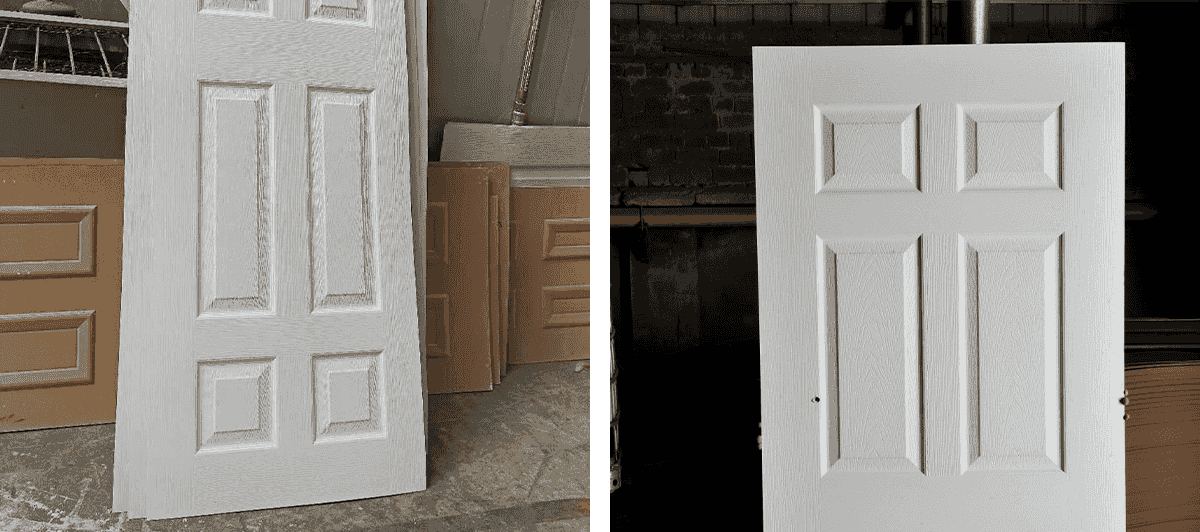
A White Primer Door is defined by its surface preparation stage rather than its core structure. In factory production, this door receives a uniform primer coating that creates a smooth, paint-ready surface. The primer is applied after the door leaf is formed and sanded, allowing consistent coverage across panels and edges.
From an industry perspective, a White Primer Door supports flexibility at later stages. Contractors or end users can apply their own finish coats on site, while manufacturers focus on providing a stable base layer. Quality control at this stage emphasizes coating thickness, adhesion, and surface smoothness.
Q2: How is a Molded Door produced on the factory line?
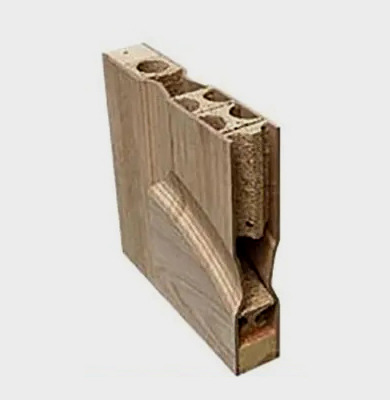
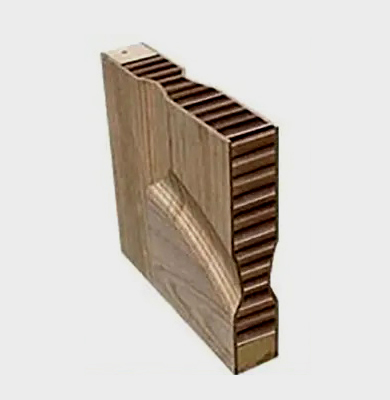
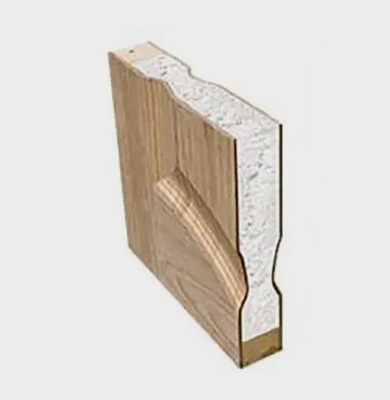
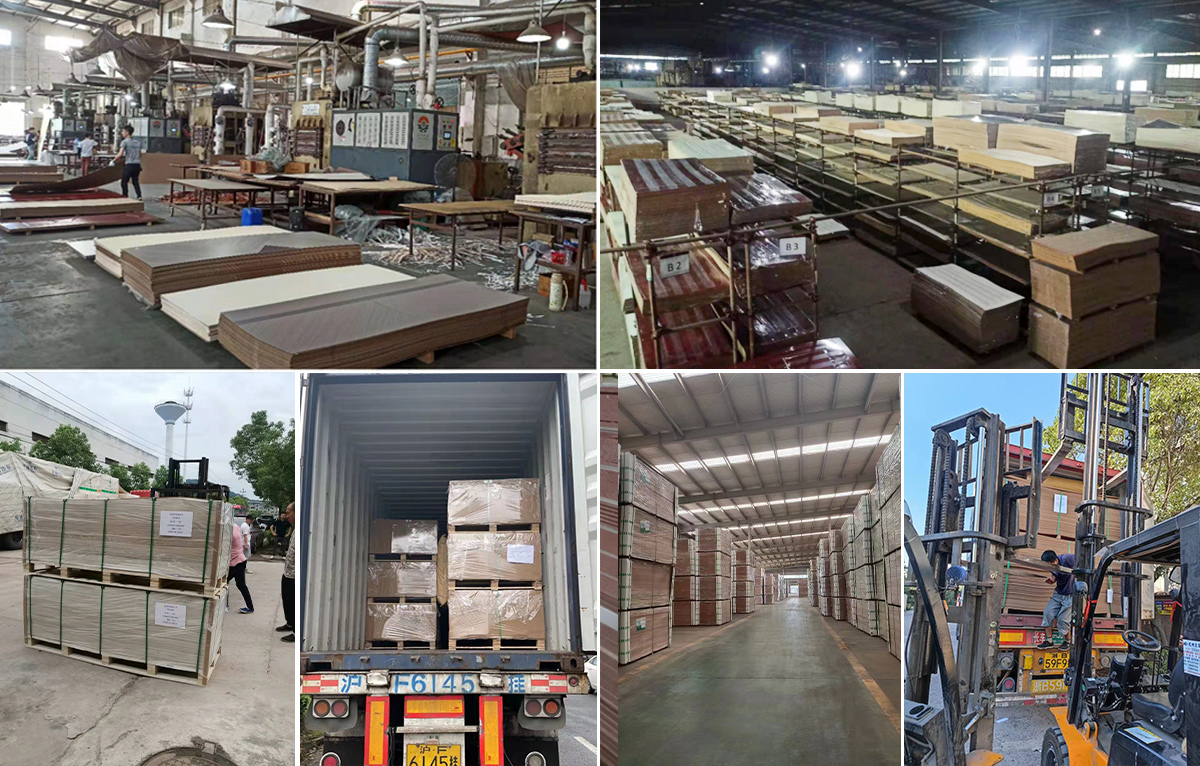
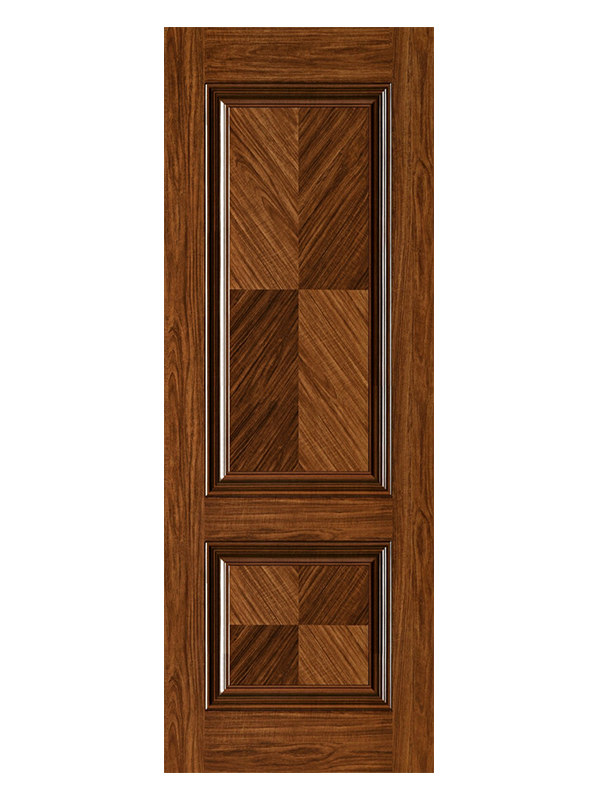
A Molded Door is shaped using pressed panels rather than assembled solid components. In manufacturing, fiber-based skins are pressed into molds under heat and pressure, forming raised or recessed patterns. These skins are then bonded to a prepared core.
Factories value a Molded Door because the shaping process is repeatable and efficient. Once tooling is set, consistent panel designs can be produced across large volumes. Inspection focuses on pattern depth, edge definition, and surface integrity after pressing.
Q3: What defines a Flush Door from a structural view?
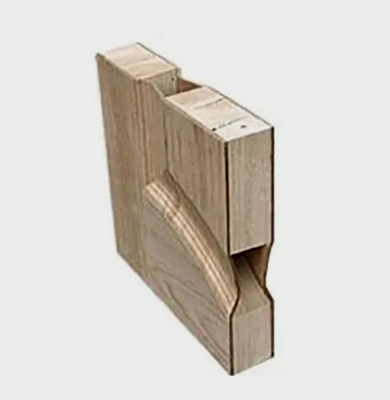
A Flush Door is recognized by its flat, unembellished surface. In manufacturing, this door is assembled by bonding smooth skins onto a core, creating a clean and even face. The absence of molded details simplifies both production and finishing.
From a factory standpoint, a Flush Door allows stable processing because surface behavior is predictable. Flat skins respond evenly during pressing and coating, which supports consistent results across batches. This structure also simplifies edge treatment and trimming.
Q4: Why do factories offer these door types under different names?
Each term highlights a different manufacturing focus. Some descriptions emphasize surface readiness, while others point to shaping methods or visual simplicity. Inside the factory, engineers translate these names into specifications that guide materials, press cycles, and finishing steps.
The table below shows how production teams interpret these descriptions:
| Term focus | Main manufacturing concern | Typical control step |
| White Primer Door | Coating uniformity | Primer thickness check |
| Molded Door | Panel shape accuracy | Mould pressure review |
| Flush Door | Surface flatness | Press balance inspection |
This approach ensures consistent output regardless of how a product is described in orders.
Q5: What quality checks apply during surface preparation?
Surface inspection is a key stage. For a White Primer Door, factories examine sanding quality before coating to avoid visible defects later. After priming, adhesion and smoothness are reviewed under standardized lighting.
When producing a Molded Door, inspectors focus on transitions between raised and flat areas. Any inconsistency may become noticeable after painting. A Flush Door is checked for uniform thickness and surface continuity, as flat designs make imperfections easier to detect.
Q6: How are these doors finished and prepared for delivery?
After assembly, doors move to finishing lines. A White Primer Door is cured and lightly sanded to maintain a paint-ready surface. Packaging is designed to protect the primer layer during transport.
A Molded Door may receive additional sealing in recessed areas to support even paint absorption later. In the case of a Flush Door, edge sealing is particularly important to ensure long-term stability once installed. Each process step follows material-specific guidelines rather than visual preference alone.
Q7: How do these door structures support flexible manufacturing?
Factories prefer these constructions because they allow variation without redesigning the core process. A Flush Door can accept different surface treatments with minimal adjustment. Switching production to a White Primer Door mainly affects the finishing stage.
Similarly, producing a Molded Door relies on tooling rather than structural change. Once molds are in place, surface patterns can be replicated efficiently. This flexibility supports both large projects and mixed orders within the same production schedule.

英语
西班牙语
俄语
土耳其语
阿拉伯语
法语